What if Play is the Way Back To Yourself?
When I was a kid, my dad’s house backed up to miles and miles of woods.
Trees wrapped in thick, twisting vines we used as rope swings. Creeks we followed for miles, stepping from rock to rock until they widened and spilled into the Potomac. Leaves that crunched under our feet, hiding beetles and toads and whatever else we decided — on that particular day — belonged to us.
We were always adopting something. A turtle. A stick we turned into a walking staff. An overgrown set of bushes that we turned into our clubhouse.
And we were almost always lost.
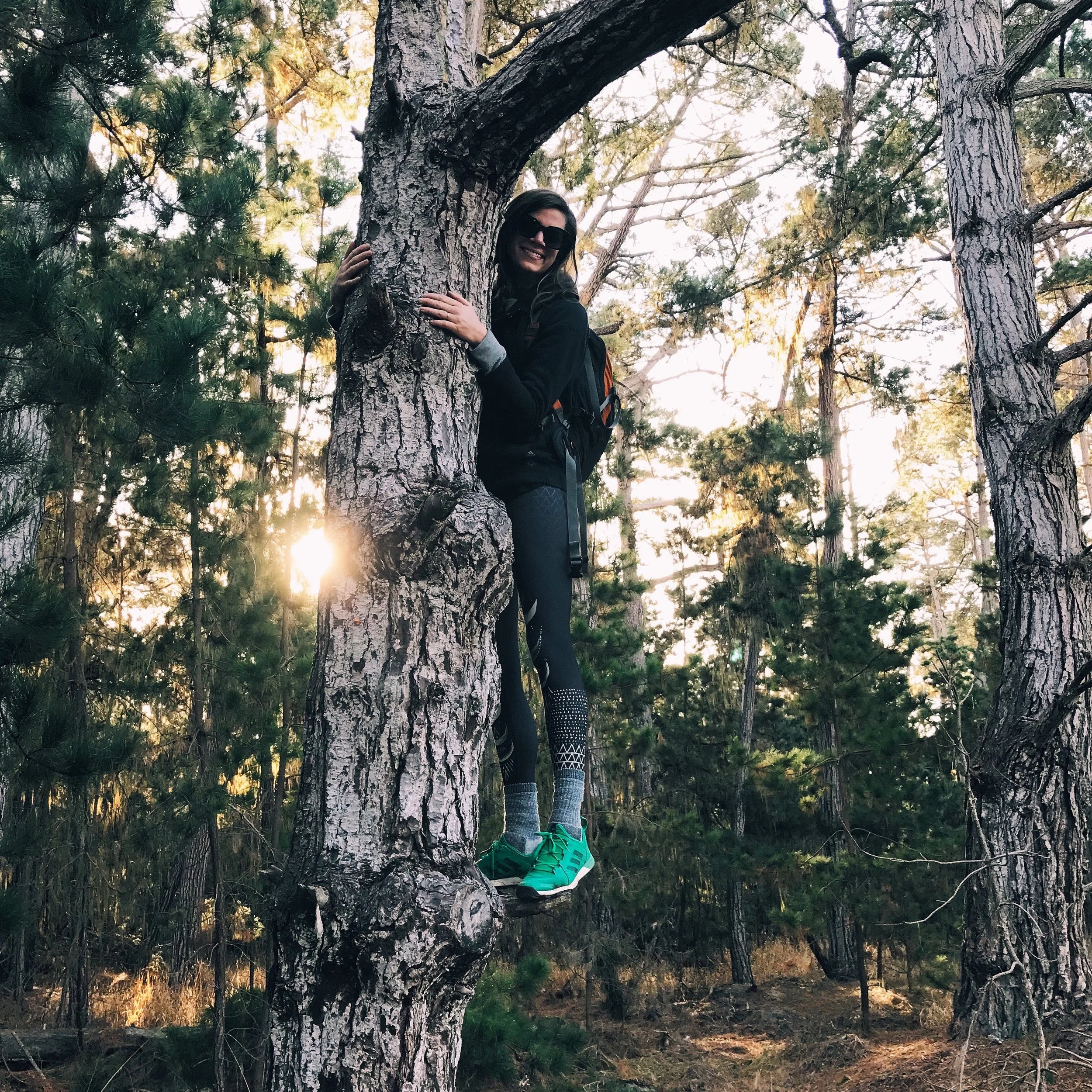
When that happened, we’d climb the tallest tree we could manage, gripping bark and wedging our sneakers into the trunk until we were high enough to see something familiar — a giant boulder, the fork in the creek shaped like a Y, a fallen tree with its roots pulled up like a rib cage.
One of us would yell and point, “That way!” And we’d climb down and run. Full speed. No hesitation. No second-guessing. It didn’t matter if we were wrong. We’d just climb another tree and try again.
I don’t think I would have called it play at the time. It was just what we did.
But it built something in me — a tolerance for uncertainty, a sense of direction that didn’t rely on a map, a willingness to follow instinct even when I couldn’t explain it.
And then, like most people, I grew up.
The woods were replaced with calendars and obligations. My days became structured, efficient, accounted for. The kinds of things that once filled hours — wandering, climbing, getting a little lost on purpose — quietly disappeared.
And when Brad died, any final shred of desire to play was replaced with deathadmin, the logistics of rebuilding a life, and the stark realization that I was simply too sad to play.
But eventually, something stirred me in a direction I couldn’t quite explain. I had built a life I loved. A city. A community. A rhythm. And still, there was this steady, almost physical urge to leave it. To go back to the woods.
So a road trip that was supposed to be for two became something else entirely. A one-woman, 10,000-mile quest.
At the time, I told myself I was searching for something. Healing, maybe. Clarity. A way to feel better. (If I’m honest, it mostly felt like running away).
But looking back now, I can see it differently. I wasn’t chasing joy. I was following something more instinctive than that.
In places where I didn’t know a single person — without witness or expectation — I started doing things I hadn’t done in years. Climbing up rocks in Joshua Tree, using my hands as much as my feet, testing each hold before shifting my weight. Hiking in Glacier, singing loud on the trail to avoid surprising a bear, heart thundering in a way that felt almost electric. Sliding down the dunes at White Sands, sand filling my shoes, cackling with glee.
It wasn’t “productive” or part of a plan. But it was something else. For a few minutes at a time, I wasn’t trying to fix anything. I wasn’t analyzing my grief or forcing myself to feel better. I was just…in it. Using my body. Making small decisions. Responding to the environment in front of me.
It took me a long time to name what that was. But looking back now, it feels obvious.
It was play.
Not joy. Not happiness. Play is something more specific than that.
It’s action without outcome. Movement without meaning. Curiosity without a reason.
It’s climbing something just to see if you can. Taking a different trail because it looks interesting. Letting yourself get a little lost and trusting you’ll figure it out.
That road trip — those small, physical, almost thoughtless moments — connected me back to a version of myself I hadn’t realized I’d lost. The girl with scraped knees and tangled hair, always being chased down with a brush. The one with dirt under her fingernails, flipping over logs to see what was underneath. The one who didn’t need a reason to do something, other than wanting to.
Maybe that thread was always there. Quieted by adulthood. Buried under responsibility and routine. And when everything else was stripped away — when the life I had built no longer made sense — I followed it. Because frankly, I didn’t know what else to do.
At the time, I was trying to control how I felt. Trying to force joy into a life that no longer held it the same way.
But emotion doesn’t work like that.
You can’t will yourself into feeling something different. What you can do is act.
You can climb the rock. Take the trail. Slide down the dune. You can follow a small impulse without needing a reason why.
And sometimes, if you do that enough, you start to recognize yourself again. Not the person you were before. But a more stripped-down version — someone closer to who you were before the world started telling you who to be.
Play wasn’t the antidote to grief. My grief remained (and remains) present. But it reconnected me to parts of myself I had buried long ago.
It didn’t take the grief away. But it gave me a way to climb high enough to see something familiar again — to point, to say that way, and to move — even if I wasn’t sure the direction was right.
Want to Explore the Idea of PLAY in Widowhood?
If you’re navigating that strange in-between — no longer living the life you had, not yet sure how to build what’s next — this is the work we do inside Joy Scout Club. Each month, we explore one theme that helps us move from survival toward intention.
April is all about Play — a way to reconnect with delight, curiosity, and the parts of ourselves that still want to feel alive.
If you’d like to explore that alongside others who understand, join us here 👇
Want to see everything we have going on this month? Check out the full schedule HERE.