Go on the solo date - and bail if you need to
I almost didn’t go.
The ticket sat on my counter all afternoon, a small rectangle of possibility and dread. I told myself I was tired. I told myself it would be awkward. I told myself it would be easier to stay home, scroll my phone, and avoid the ache of walking into a place where I would so obviously be alone.
All of that would be true.
Going to a concert solo felt like crossing an invisible line — one I wasn’t sure I was ready for yet. This used to be our thing. Music had always been shared, anticipated together, remembered together. The idea of standing in a crowd without Brad felt like an announcement of absence.
I hovered in that familiar widow space: wanting to live, wanting to hide, wanting to cancel, wanting to go.
What I’ve learned over the years is that it’s always easier to stay, but growth happens when you go.
So I went.
Walking in alone, I felt hyper-aware of my body, my hands, the way I stood. I wondered if people could tell. If they were noticing. If they felt sorry for me. I scanned the room for proof that I didn’t belong — and of course, found it everywhere. The happy couples holding hands. The loud group of friends I didn’t yet have in this new town.
I felt completely alone.
And then the lights dimmed.
When the music started, something surprising happened: no one cared. Not in the cruel way — but in the liberating one. Everyone was there for the same reason. Everyone was singing the same lyrics, swaying to the same beat, holding their own private histories inside a shared experience.
I wasn’t alone in the way I feared. I was part of something collective. Anonymous. Unremarkable. Free.
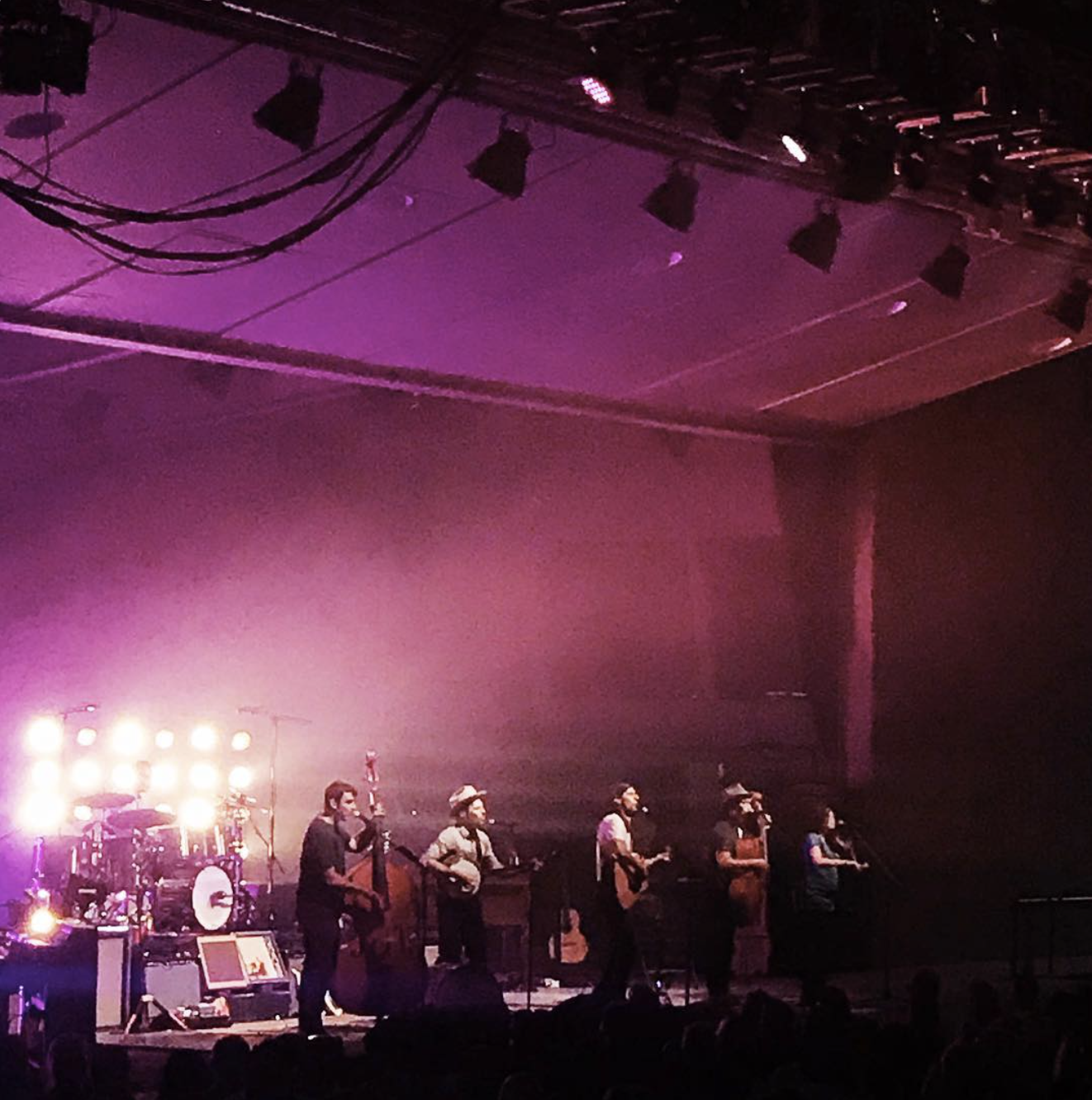
The Avett Brothers sounded exactly the way I hoped they would — familiar and grounding and steady — and for a while, I let myself be carried by the music.
And then, quietly, I noticed my limit.
Even though I was proud of myself for going, and even though I loved the band, it was still hard to be there alone. The crowd. The shared joy. The reminders of what used to be.
So I left. Not in defeat, but in honesty.
That felt important too.
Leaving early didn’t cancel out the courage it took to show up. It didn’t mean I failed the experiment. It meant I listened to myself, honored what I could hold that night, and let that be enough.
I realized then that so much of what keeps us stuck after loss isn’t the doing — it’s the imagining. The stories we tell ourselves about what it will feel like. The assumption that stepping out alone will only amplify our grief, when sometimes it actually gives it room to breathe — even if only for a song or two.
That night didn’t fix anything. It didn’t make me brave forever. It didn’t erase the longing for what used to be.
But it taught me something important.
I am allowed to take up space in the world as I am now. I don’t need a companion to justify my presence. And I’m also allowed to have limits — to leave early, to choose tenderness over endurance, to let “this was enough for today” be a success.
Some experiences — music especially — don’t belong to couples or families or versions of ourselves that no longer exist. They belong to the living.
I left the concert tired, ears ringing, heart a little steadier.
Not because I was suddenly okay — but because I reminded myself that I can still show up. And that I can also take care of myself when showing up is hard.
Sometimes, putting yourself out there isn’t about joy.
It’s about remembering that you’re still here.
That night didn’t fix anything. It didn’t make me brave forever. It didn’t erase the longing for what used to be.
But it taught me something important.
So much of life after partner loss isn’t about grand reinvention — it’s about experimentation. About trying something, noticing how it feels, and letting that information guide the next step. It’s about learning, slowly and imperfectly, how to take up space again in a world that no longer looks the way you expected it to.
Going to that concert alone wasn’t about music. It was about asking a bigger question: What might a life I love still look like?
After loss, many of us find ourselves standing in a strange in-between — no longer living the life we had, not yet sure how to build what’s next. You’re not rushing forward, but you’re not willing to stay frozen either. You want to believe another life is possible, even if you don’t yet have the language for it.
That in-between space is where so much of this work happens. And it’s the space we explore inside Joy Scout Club.
Joy Scout Club isn’t about pretending grief goes away or forcing joy before you’re ready. It’s about learning how to live alongside loss — how to try small, intentional things, reflect on what they stir up, and begin shaping a life that feels meaningful, connected, and true to who you are now.
Sometimes that looks like going to a concert alone. Sometimes it looks like staying home and listening to your body. Sometimes it looks like imagining a future you don’t yet know how to reach.
This month we’re exploring what it means to date yourself.
If you’re navigating that space — the one between survival and possibility — you don’t have to do it alone.
If you’re not yet a member of Joy Scout Club, you can learn more and join us here:
Want to see everything we have going on this month? Check out the full schedule HERE.